
New restaurant owners face one of their first big decisions: how to launch. A grand opening brings crowds and buzz, but it can also bring chaos. A soft opening lets you test everything quietly, but it might miss the chance to make a splash.
Both approaches have their place. The right choice depends on your restaurant's readiness, your goals, and what kind of first impression you want to make.
This guide breaks down what each launch style means, when each works best, and how to decide what fits your situation.
What Is a Soft Opening?
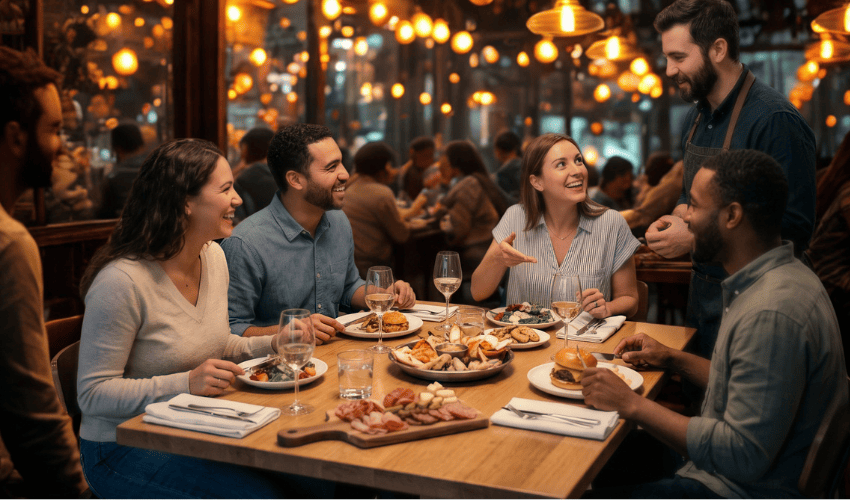
A soft opening is your restaurant's quiet debut. You open to a small, controlled group, usually friends, family, local regulars, or invited guests, before welcoming the general public.
The focus stays on operations. You want to work out kinks in service, timing, menu execution, and staffing while the pressure stays low. Think of it as your final rehearsal with a live audience.
Soft openings typically last 3-10 days. Some restaurants limit hours or menu items during this phase. The goal is simple: make sure everything runs smoothly before you invite the whole town.
Most soft openings generate little public buzz. You might post a quiet announcement to your email list or neighborhood groups, but you avoid big advertising. This keeps expectations low while you build confidence.
What Is a Grand Opening?
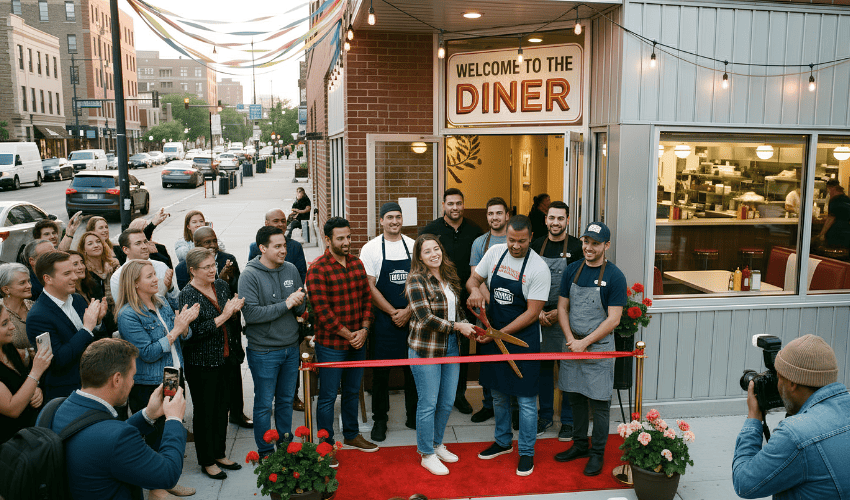
A grand opening is your public debut. You throw open the doors to everyone and promote it heavily. Expect lines, media mentions, influencers, and a packed house from day one.
This approach aims to create excitement and fill seats immediately. You want maximum visibility, foot traffic, and social proof right out of the gate. Grand openings often include events, giveaways, live music, ribbon cuttings, or local VIPs.
The timeline is shorter, usually one big day or a weekend event. Preparation takes weeks or months because you're promising a flawless first impression to a large crowd.
Grand openings live or die by execution. When they work, they generate momentum that carries your restaurant for weeks. When they stumble, early negative impressions may linger.
Key Differences Between Soft Opening and Grand Opening
|
Aspect |
Soft Opening |
Grand Opening |
|
Scale and visibility |
Intimate (20-50 people per service) |
Crowds (100-500+ people) |
|
Timing and duration |
Several days with limited hours |
1-3 high-energy days |
|
Menu and operations |
Shortened menu, flexible service |
Full capacity from first minute |
|
Marketing approach |
Quiet word-of-mouth |
Heavy promotion (social, press, ads) |
|
Cost |
Lower (mostly food/wages) |
Higher (marketing, events, staffing) |
|
Risk |
Low public risk |
Reputation risk if service falters |
Pros and Cons of Each:
When Should You Choose a Soft Opening?
Consider a soft opening when any of these apply to your situation:
You're still refining operations. If your menu, timing, or service flow needs work, use the soft opening to stress-test everything. Better to discover you need 2 extra cooks during friends-only service than during your ribbon cutting.
Limited initial capacity. New restaurants often underestimate kitchen volume or table turns. A soft opening reveals your true throughput before you overpromise to 300 people.
Complex menu or concept. If you serve multi-course tasting menus, molecular gastronomy, or anything requiring precision timing, give yourself practice runs.
New team. If more than half your staff are first-time employees, they need real reps before prime time. Soft openings let them learn without the entire town watching.
Seasonal timing. Opening in winter? Test with a small group before committing to full blast during bad weather.
Tight budget. Can't afford grand opening marketing? Use the soft opening to generate organic buzz through genuine word-of-mouth.
When Should You Choose a Grand Opening?
Go big when these factors line up:
Everything tested and proven. You've run pop-ups, friends-and-family nights, or soft opening phases. Kitchen flows, service rhythms, and menu execution feel solid.
High-visibility location. Corner lot, main street, heavy foot traffic? Maximize that advantage with a launch that matches the exposure.
Established brand or chef. Second location, celebrity chef, or franchise? Leverage existing awareness with a splashy debut.
Peak season timing. Summer, holidays, festivals? Ride the natural traffic surge with maximum capacity from day one.
Competitive market. Saturated dining scene? You need immediate market share and can't afford a quiet start.
Strong operational team. Veteran manager, experienced sous chef, reliable FOH? Trust your team to handle the volume.
Best Strategy: Should You Do Both?

Many successful restaurants combine both approaches strategically.
The hybrid model: Run a true soft opening (5-7 days, limited capacity, invited guests only). Use this time to genuinely perfect operations. Then schedule your grand opening 10-14 days later when you've worked out the kinks and built quiet momentum.
Why this works: You get soft opening benefits (testing, staff training) without sacrificing grand opening impact (buzz, traffic, social proof). The gap gives you real data about your pacing, popular items, and service bottlenecks.
Execution tips:
-
Don't call the soft opening phase a "soft opening" publicly. Frame it as "preview nights" or "friends and family."
-
Use soft opening feedback to refine your grand opening menu and flow
-
Build anticipation during the soft phase with subtle social media posts
-
Staff the grand opening with your strongest team
-
Have overflow plans ready (waiting list, reservations, extra seating)
Timeline example:
Days 1-7: Soft opening (20-40% capacity, invited guests)
Day 8-10: Closed for final prep and menu tweaks
Day 11-13: Grand opening weekend (100% capacity, heavy promotion)
Grand Opening Vs. Soft Opening FAQ’s
Q: What is the difference between a soft opening and a grand opening for restaurants?
A soft opening is a quiet test run with limited guests to work out operations, while a grand opening is a public event designed to attract crowds and create buzz. The soft opening focuses on private refinement; the grand opening prioritizes maximum visibility and revenue from day one.
Q: Should restaurants do a soft opening before a grand opening?
Most experts recommend a soft opening first to test kitchen flow, service timing, and staff performance before committing to a high-pressure grand event. This approach catches issues privately and builds operational confidence for the public launch.
Q: How long should a soft opening last for a new restaurant?
Soft openings typically run 3-10 days with limited hours and a shortened menu, giving you enough time to identify patterns without burning out staff or food costs. The exact length depends on your readiness and how many service cycles you want to test.
Q: When should you choose a soft opening for your restaurant?
Choose a soft opening if your operations need testing, you have a new team, your menu is complex, or you want to minimize first-week risk. It works well for seasonal launches, tight budgets, or when you need honest feedback before going public.
Q: When should a restaurant do a grand opening instead of a soft opening?
Opt for a grand opening when your operations are proven, you have a high-visibility location, strong staff, or want immediate market share in a competitive area. Peak seasons or established brands can also skip straight to grand to maximize early momentum.
Q: What are the benefits of a soft opening restaurant?
Soft openings let you gather real customer feedback, train staff under pressure, fix service bottlenecks, and generate quiet buzz before your official debut. They reduce the chance of public stumbles and help you launch more confidently.
Q: Can you do both a soft opening and grand opening?
The best strategy for many restaurants is a soft opening (5-7 days) followed by a grand opening 10-14 days later, using the quiet phase to refine operations before scaling up to full crowds.
The Bottom Line
Neither approach works perfectly in isolation.
Soft openings reduce risk but slow momentum. Grand openings create buzz but invite chaos.
Most restaurants benefit from starting controlled, then scaling up. Use the soft phase to earn confidence in your operations. Save the fireworks for when you know you can deliver.
Your launch sets the tone for your first 90 days. Make sure it matches what your restaurant can actually execute.