
TL;DR: 30 Second Executive Summary for Operators
A restaurant loyalty program is more than a discount program and the strongest programs balance customer value with restaurant economics. Choose the loyalty model based on your restaurant concept, make rewards easy to understand, reduce friction during enrollment and redemption, and measure whether the program is actually changing customer behavior.
Key operator principles:
• Treat loyalty as a customer retention and data strategy, not simply a discount tool.
• Protect margins by designing rewards around their actual cost to the restaurant.
• Match the loyalty model to your restaurant's customer behavior and service style
• Model Selection: QSR/Fast Casual = Points-Based | Full-Service/Fine Dining = Tiered & Experiential Perks | Cafés = Subscriptions.
• Measure repeat visits, customer spending, reward redemption, reactivation, and program costs rather than focusing only on enrollment.
The Shift in Guest Behavior
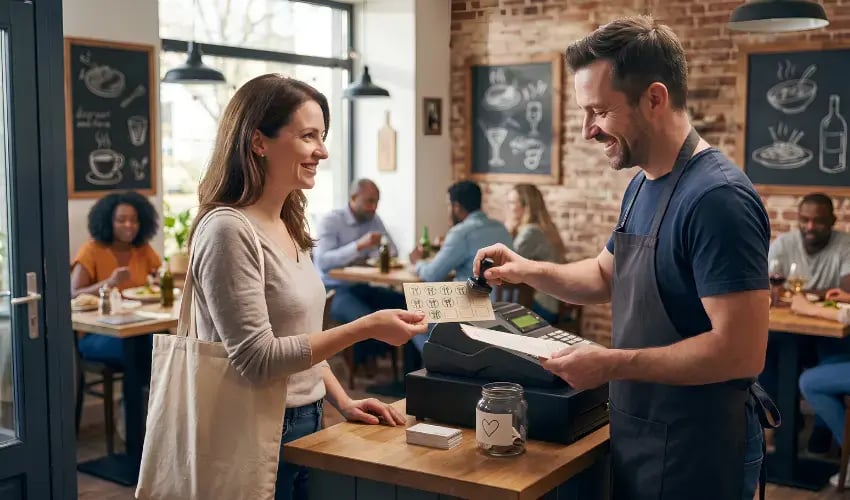
Getting a customer through the door is only the beginning. The larger opportunity is encouraging that customer to choose your restaurant again.
A restaurant loyalty program can help create that repeat behavior by making future visits more valuable, more convenient, or more personalized. It can also give restaurants useful information about purchase history and customer visit patterns that can support more relevant marketing.
Restaurant loyalty participation is already widespread. Deloitte found that 47% of restaurant loyalty members use their memberships several times a month, while 32% use them several times a week. The same research found that 67% of respondents belonged to two or more restaurant loyalty programs.
That creates an important challenge for operators. Having a loyalty program does not automatically make customers loyal to your restaurant. Your program still needs to provide clear value and make the experience easier than the alternatives.
The best programs connect several elements:
Good experience + useful rewards + convenience + relevant communication = stronger reasons to return
Part 1: The Business Case for Restaurant Loyalty
A successful loyalty program should create a financial cycle for the restaurant:
More repeat visits + stronger customer relationships = greater customer value over time
The objective is not to reward every purchase with the biggest possible discount. It is to encourage behavior that creates profitable repeat business.
The First Party Data Advantage
When customers interact directly with a restaurant's loyalty and ordering systems, the restaurant can build a more useful view of customer behavior.
This information can support more relevant communication and help restaurants identify customers who are becoming less active.
For example, a customer who normally visits every two weeks but has not returned for six weeks may be a stronger reactivation candidate than a customer who visited yesterday.
Predictable Repeat Revenue
A loyalty program can help turn occasional purchases into more consistent customer behavior.
Restaurants can use purchase history to identify patterns and create communications around them. A customer who regularly visits during lunch may respond differently from someone who primarily orders on weekends.
The objective is not to send more messages.
The objective is to send more relevant messages.
To see how the earning, redemption, and communication cycle works in practice, explore our guide to how restaurant loyalty programs work .
Loyalty Should Protect Margin
Generic discounts can reduce revenue without necessarily changing customer behavior.
A stronger strategy is to give customers something they value while controlling the restaurant's actual cost.
That could mean a beverage, side dish, bonus points during slower periods, an exclusive menu item, or another reward whose perceived value is greater than its cost to the business.
Part 2: Choosing the Right Loyalty Model
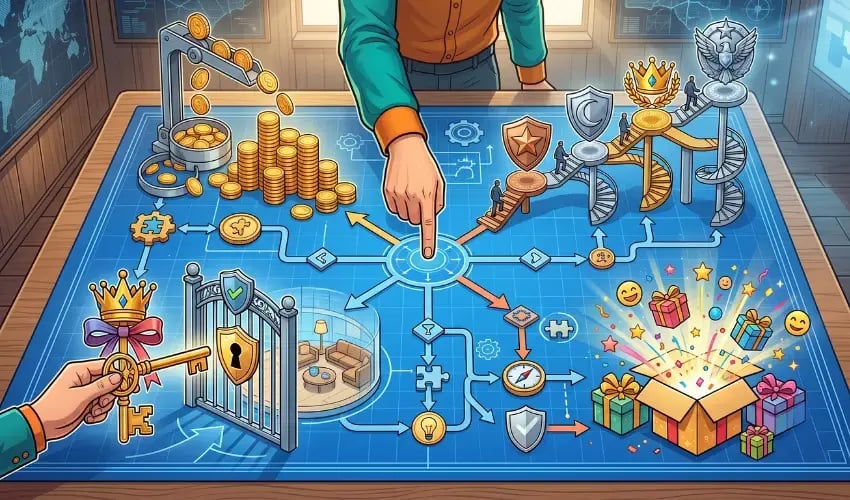
There is no single loyalty structure that works for every restaurant.
Customer visit frequency, average check, restaurant format, margins, and service style should all influence the model you choose.
|
Loyalty Model |
Best to Consider For |
Main Advantage |
|
Points Based |
Quick service, fast casual, coffee shops |
Simple to explain and easy to repeat |
|
Tiered Loyalty |
Casual dining and full service concepts |
Encourages customers to work toward higher benefits |
|
Subscription or VIP |
Cafés, lunch concepts, businesses with frequent visits |
Can create recurring revenue and predictable benefits |
|
Surprise and Delight |
Fine dining and experience focused concepts |
Creates recognition without relying entirely on discounts |
These are starting points, not fixed rules.
A coffee shop may benefit from points because customers visit frequently. A fine dining restaurant may create stronger loyalty through recognition, priority reservations, special experiences, or access to exclusive events.
The right model is the one your customers understand and your operation can support profitably.
Part 3: Designing Rewards That Protect Margins
The most common mistake in loyalty strategy is treating reward value as the same thing as reward cost.
Customers judge a reward by its perceived value. Restaurants need to judge it by its actual cost and the behavior it creates.
Research published in the International Journal of Contemporary Hospitality Management found that restaurant customers showed strong preferences for immediate and monetary rewards, while quality and convenience also received high ratings. The study also found that casual dining customers showed interest in exploration and entertainment based rewards.
This suggests that restaurants should think beyond a single discount percentage.
High Perceived Value, Controlled Cost
Examples include:
• A complimentary side that has a relatively low food cost
• A specialty beverage
• Bonus points during slower hours
• Priority access to an event
• Early access to a new menu item
• A personalized birthday reward
• An invitation to an exclusive experience
The right reward depends on your menu economics and customer behavior.
A Simple Giveback Formula
Use this formula to understand the value of a reward relative to the spending required to earn it:
Giveback Rate = Reward Menu Value ÷ Spend Required to Earn Reward × 100
Example:
A customer spends $100 to earn a reward with a menu value of $7.
$7 ÷ $100 × 100 = 7%
The resulting 7% is the reward's stated menu value relative to the qualifying spend.
That number is useful as a planning measure, but it should not be treated as a universal industry standard. The appropriate reward level depends on food cost, contribution margin, customer frequency, redemption behavior, and the incremental business generated by the program.
Part 4: POS Integration and Automated Retention
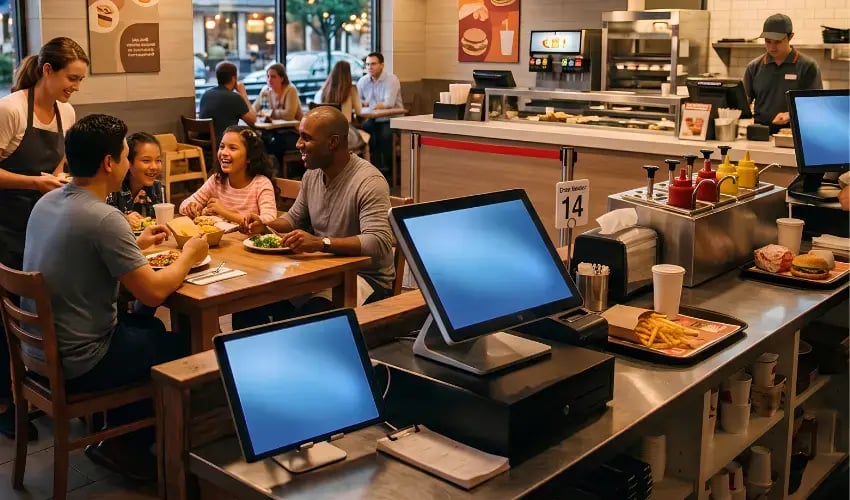
A loyalty program should fit naturally into the customer's ordering process and the restaurant's daily workflow.
When loyalty is disconnected from the POS or ordering system, customers and staff may have to manage additional steps for enrollment, earning, balance tracking, or redemption.
An integrated system can reduce those steps. Salesforce, for example, documents restaurant POS integrations that allow systems to look up members, retrieve available vouchers, redeem rewards, and record loyalty accrual after payment.
How the Loyalty Journey Can Work
1. Customer places an order
The customer orders at the restaurant, online, or through a self service channel.
2. Loyalty information is captured
The customer identifies the loyalty account using information such as a phone number or account credentials.
3. The loyalty balance updates
The system records eligible spending and updates the customer's reward balance.
4. Customer behavior triggers communication
The system can identify changes in customer activity and support relevant messages or offers.
For example, a restaurant could create a reactivation campaign for customers who have not visited within a period that is longer than their normal visit pattern.
The important point is that automation should respond to customer behavior, rather than sending the same promotion to everyone.
Part 5: Measure Loyalty Program Performance
Enrollment is an important starting metric, but it does not prove that a loyalty program is profitable.
A better measurement framework focuses on what customers actually do.
1. Customer Lifetime Value
A simple way to estimate revenue generated per customer is:
Estimated Customer Lifetime Value = Average Order Value × Purchase Frequency × Customer Lifespan
For a more financial view, restaurants can replace revenue with contribution margin.
2. Repeat Visit Rate
Measure how many loyalty members return within a defined period.
For example:
Repeat Visit Rate = Members Who Returned ÷ Members in the Starting Group × 100
3. Win Back Rate
Use this to evaluate campaigns aimed at inactive customers:
Win Back Rate = Reengaged Inactive Guests ÷ Inactive Guests Targeted × 100
4. Reward Redemption Rate
A very low redemption rate may mean customers do not understand the reward, cannot reach it easily, or do not value it.
A very high redemption rate can also require attention if reward costs are reducing profitability.
5. Program Net ROI
Measure the incremental financial value produced by the program against the full cost of operating it.
Program Net ROI = Incremental Contribution From Loyalty Customers − Program Costs ÷ Program Costs × 100
The word incremental matters.
Loyalty members may spend more than nonmembers simply because people who already visit frequently are more likely to join. That does not prove the loyalty program caused the additional spending.
A stronger analysis compares behavior over time or against a suitable comparison group.
A Simple Restaurant Loyalty ROI Example
Consider a fictional restaurant with:
• 1,000 active loyalty members
• Average monthly spend of $40 per member
• Monthly loyalty revenue of $40,000
Now suppose the restaurant improves its communication and rewards structure and average monthly member spend increases to $44.
That creates:
$4 additional monthly revenue per member
Across 1,000 members:
1,000 × $4 = $4,000 additional monthly revenue
This is only an illustration. It does not prove that a loyalty program will produce a specific increase in spending.
The restaurant still needs to subtract the cost of rewards, software, communication, and other program expenses to determine whether the additional contribution is profitable.
That is why a strong loyalty strategy measures incremental profit, not just member sales.
Loyalty Is Not a Substitute for a Good Restaurant Experience
A loyalty program can reinforce a good customer experience, but it cannot permanently compensate for poor food, unreliable service, difficult ordering, or inconsistent quality.
Restaurants should therefore treat review management and customer feedback as part of the larger experience they are trying to improve.
Restaurant loyalty research has consistently connected satisfaction and service experiences with repeat patronage.
Think of loyalty as a reinforcement system.
If customers already have reasons to return, loyalty can make those reasons stronger.
If customers do not want to return, more points may simply make an existing problem more expensive.
The foundation should therefore be:
Consistent experience → customer satisfaction → convenient return experience → relevant reward → repeat behavior
How to Choose Between SMS and Email
The best communication channel depends on the message.
The objective should be relevance rather than volume.
Deloitte's research also emphasizes personalization and exclusive access as important levers as loyalty programs become more experiential.
Restaurant Loyalty Strategy by Concept
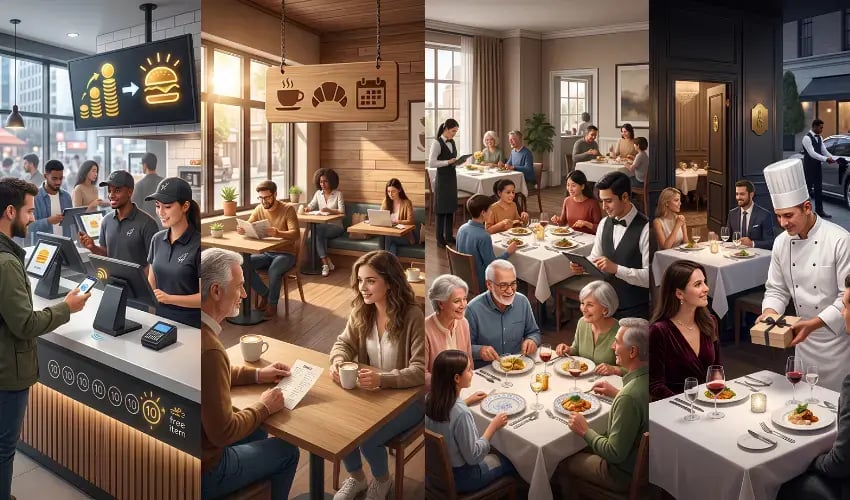
Different restaurants should prioritize different forms of loyalty.
Quick Service and Fast Casual
Keep the program simple and fast.
Points, visit rewards, and easy redemption can work well when customers visit frequently and transactions move quickly.
Full Service
Consider combining rewards with experiences.
Priority reservations, birthday benefits, personalized offers, and tiered recognition can complement monetary rewards.
Cafés and High Frequency Businesses
Frequent visits create opportunities for points, visit rewards, subscriptions, or member benefits.
The key is making the reward easy to understand and easy to redeem.
Fine Dining
A traditional discount program may not match the brand experience.
Consider recognition, special events, priority access, personalized service, or exclusive experiences instead.
These are strategic options rather than universal formulas. Customer behavior and restaurant economics should determine the final model.
Frequently Asked Questions about Restaurant Loyalty Program
Should upscale or fine dining restaurants use a loyalty program?
Yes, but the program does not have to rely on standard discounts. Fine dining concepts may benefit from VIP recognition, priority reservation windows, exclusive events, personalized experiences, or other benefits that fit the restaurant's positioning.
What is the best loyalty program model for a restaurant?
There is no universal best model. Points based programs may suit restaurants with frequent transactions, while tiered, VIP, subscription, or experiential programs may suit concepts with different customer behavior. The right model depends on visit frequency, average spend, margins, and the behavior you want to encourage.
How much should a restaurant give back through loyalty rewards?
There is no universal percentage that works for every restaurant. Reward value should be evaluated against food cost, contribution margin, customer behavior, redemption rates, and the additional business generated by the program. A reward that looks generous to the customer can still be profitable when its actual cost is controlled.
How much does a restaurant loyalty program cost?
Program costs vary widely based on the software, POS integration, number of locations, communication channels, customer volume, and reward structure. Restaurants should evaluate software costs together with reward expense, marketing costs, staff time, and the additional profit the program generates.
How long does it take for a restaurant loyalty program to show ROI?
There is no universal timeline. A restaurant can monitor early indicators such as enrollment, redemption, repeat visits, and reactivation relatively quickly, but meaningful ROI analysis generally requires enough customer activity to compare behavior and program costs over time. The appropriate measurement period depends on the restaurant's normal visit frequency.
How do restaurants measure loyalty program ROI?
Measure incremental contribution rather than enrollment alone. Track repeat visit rate, purchase frequency, average order value, reward redemption, win back performance, customer lifetime value, program costs, and the difference between loyalty member behavior and an appropriate comparison group.
Should restaurants use SMS or email for loyalty marketing?
Both can be useful. SMS is better suited to timely messages and short offers, while email can support broader updates, announcements, and more detailed communication. The best channel depends on the message, customer preference, and frequency of communication.
How does POS integration improve a restaurant loyalty program?
POS integration can reduce manual steps involved in enrollment, earning, balance updates, and reward redemption. It can also connect purchase activity with loyalty records and support automated customer communication. Salesforce documents these capabilities in its restaurant POS loyalty integration framework.
Should restaurant loyalty programs use discounts or experiences?
Both can be effective. Research has found that monetary rewards are important to many restaurant customers, while quality, convenience, exploration, and entertainment can also influence reward preferences. Restaurants can combine financial rewards with exclusive access, personalization, and experiences to create a broader value proposition.
Can a loyalty program fix declining restaurant sales?
Not by itself. A loyalty program can help encourage repeat purchases and provide customer behavior data, but it cannot replace strong food quality, service, convenience, pricing, or customer experience. The program should reinforce a restaurant that customers already have reasons to choose.
Transform Your Guest Retention Strategy
Restaurant loyalty works best when it is treated as part of a broader restaurant marketing strategy, rather than a collection of discounts.
Start by identifying the behavior you want to change.
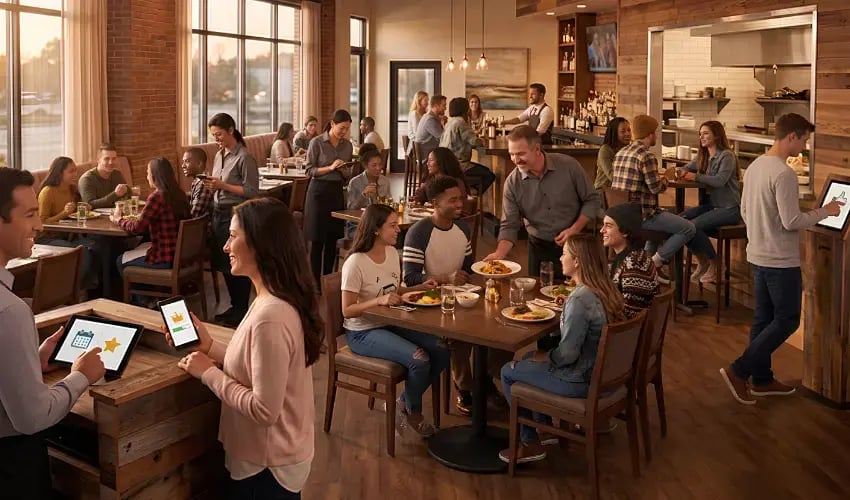
Do you want customers to visit more often?
Spend more per visit?
Return after becoming inactive?
Try additional menu categories?
Choose direct ordering?
Then build the reward and communication strategy around that objective.
A strong loyalty program connects four things:
Customer behavior + meaningful value + operational simplicity + measurable financial results
That is what turns loyalty from a marketing feature into a retention engine.