
Restaurant recruiting in 2026 is less about “posting and praying” and more about building a repeatable hiring engine that responds fast, sells the role clearly, and reduces churn through better onboarding and scheduling.
At the same time, turnover makes growth expensive. When you lose a restaurant employee, the hidden costs add up fast (manager time, training, schedule gaps, slower service, missed sales), so predictable demand from targeted campaigns helps protect margins and stabilize revenue.
For faster wins:
- Respond to applicants within 24 hours and book interviews in 1–2 clicks.
- Turn each role into a simple scorecard (skills + availability + attitude).
- Keep your Google Business Profile and socials “employment-friendly” (photos, culture, clear hours).
- Use a hybrid sourcing mix: referrals + job boards + social + local partnerships.
- Treat onboarding as retention. High turnover is still a real cost center in restaurants.
2026 Hiring Reality

Many restaurant operators still report hiring pressure. 70% report job openings that are tough to fill, and 45% say they don’t have enough employees to support existing customer demand (National Restaurant Association, via NetSuite)
Turnover has improved in some segments compared to peak years, but restaurant churn (especially hourly roles) remains high enough that recruiting and retention have to run together as one system.
The practical takeaway: the “best” recruiting strategy is the one that keeps your candidate pipeline full every week, not just during emergencies.
Build a Recruiting System
Define The Roles
- Start restaurant recruiting by defining what “qualified” means for each role in 5–7 bullets (must-haves vs. nice-to-haves).
- Keep the scorecard consistent across hiring managers so interviews don’t drift into gut-feel decisions.
- This also makes it easier to hire restaurant staff quickly when you’re under pressure, because everyone is evaluating the same criteria.
Make Job Post a Sales Page
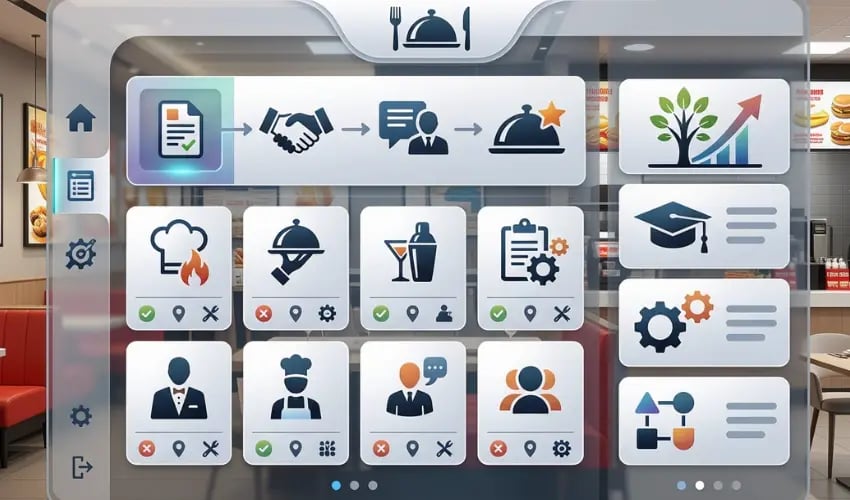
A good job post is a conversion page: it should tell candidates (1) what the job is, (2) what success looks like, and (3) what they get in return.
Use plain language, include pay range if possible, list schedule expectations clearly, and highlight 2–3 reasons your restaurant is a good place to work.
If you’re competing with other food service staffing options in your area, clarity and speed usually beat “generic” listings.
Build a Weekly Sourcing Mix (not one channel)
Aim to run at least 3 channels continuously:
- Referrals (fastest quality signal): give staff a simple way to refer and track it weekly.
- Job boards: keep postings refreshed and updated so they don’t go stale.
- Social/community: short “we’re hiring” videos and local community groups can attract high-intent applicants.
Speed-To-Lead: Respond in 24 Hours
Fast response matters because many candidates apply to multiple jobs at once, and the first restaurant to schedule typically wins the interview.
Set a standard: every application gets a response within 24 hours, even if it’s a “not a fit” message. Use templates so your team can move quickly without sacrificing professionalism.
Standardize The Interview (and reduce no-shows)

Use a simple interview structure:
- 3 minutes: confirm availability + role expectations.
- 7 minutes: 3 behavioral questions (guest conflict, teamwork, reliability).
- 5 minutes: role-specific quick check (menu knowledge, knife skills, POS comfort, etc.).
Send a confirmation message immediately after booking and a reminder the day-of to reduce no-shows.
Staffing Plan and Agency Support
Restaurant recruiting works best when it’s tied to a staffing plan, not just open roles.
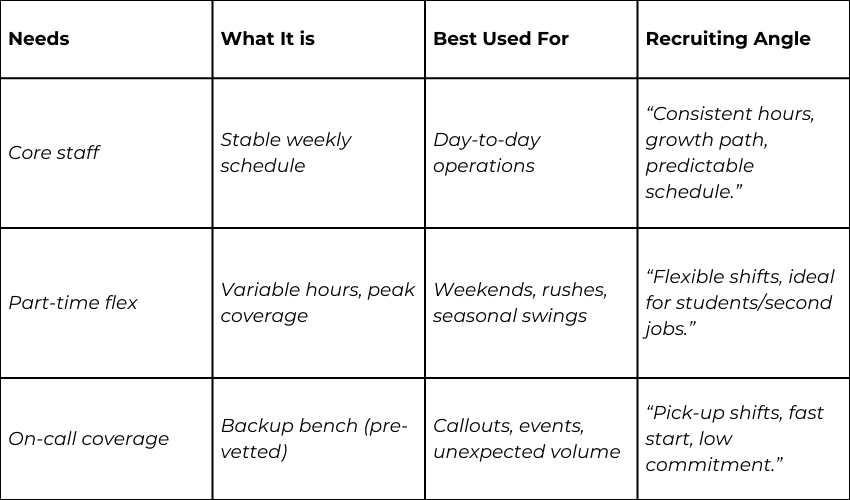
Forecast your needs by daypart and sales patterns, then decide what you need in (1) core staff, (2) part-time flex, and (3) on-call coverage.
What Does “Core vs Flex vs On-Call” Mean?
When a restaurant staffing agency makes sense
A restaurant staffing agency (or recruitment agencies for restaurant staff) can be a strong fit when:
- You’re opening a new location or expanding hours.
- Turnover is draining manager time every week.
- You need consistent applicant flow for multiple roles at once.
- You want help with job ad visibility, competitive pay checks, and ongoing optimization.

How Can Best POS Restaurant Marketing Agency Plug In
Best POS Recruiting Services are positioned as ongoing recruiting support that covers key steps like creating/optimizing recruiting profiles, writing job descriptions, job posting and optimization, performance tracking, and recruitment advertising.
The service also describes Monday–Friday support for posting requests and responding to inquiries, which is useful if your managers can’t keep up with candidate follow-up during service.
If the goal is to hire restaurant staff faster without burning out operators, this type of done-for-you recruiting system can act as the “engine room” behind your hiring funnel.
Retention is Recruiting (reduce churn)
In restaurants, replacing people is expensive and disruptive, so retention improvements reduce recruiting pressure immediately.
Research on restaurant workforce trends shows turnover remains a persistent issue (especially in hourly roles), and replacement/training costs can be significant.
30–60–90 Day Retention Plan
A 30–60–90 plan is a structured way to keep new hires from quitting by giving them clear training, feedback, and progression at predictable milestones instead of leaving success to chance.
- Days 1–30: structured onboarding, role shadowing, clear standards, and early feedback.
- Days 31–60: certify core skills, begin cross-training, and set performance expectations.
- Days 61–90: build consistency (preferred shifts, growth path, incentives tied to reliability/quality).
Operational Fixes That Improve Hiring Outcomes
Retention also makes recruiting easier because stable teams create better guest experiences, stronger reviews, and a healthier culture. These are the things candidates notice.
.webp?width=850&height=500&name=restaurant%20operations%20optimization%20(1).webp)
Fix the basics that drive churn: inconsistent schedules, unclear side-work, weak training, and “no feedback until it’s too late.”
Even small improvements here reduce how often you need emergency food service staffing.
Implementation Checklist
Use this weekly cadence to keep restaurant recruiting consistent:
- Post/refresh roles: 1–2x per week.
- Review applicants daily (even 10 minutes).
- Interview days: set fixed blocks (e.g., Tue/Thu 2–4 PM).
- Track 5 metrics: applicants, interviews booked, show rate, hires, 30-day retention.