Fast Casual vs. Fine Dining: Which Marketing Strategies Actually Work?
In the competitive restaurant industry, digital advertising is no longer optional, it is a game-changer. It enables restaurants to reach a broader audience, drive local traffic, and boost sales in real-time. Whether you're a small neighborhood café or a bustling fine-dining establishment, understanding how to leverage digital tools will set you apart from the competition.
Why is Digital Advertising Important for Restaurants?
Digital advertising helps restaurants get in front of diners exactly when they are deciding where to eat, whether they are searching on Google, scrolling social media, or comparing options on review sites. It can become one of the most reliable levers for traffic and revenue if done well.

Expand Reach
Digital advertising allows you to break geographical barriers. A survey from MGH found 77% of diners visit a restaurant’s website before dining in or ordering.
So a strong presence ensures you are found by those actively searching for a place to eat.

Drive Sales
You can promote limited-time offers, seasonal menu items, or special events directly to your target audience.
Studies show that restaurants using digital ads experience up to a 20% increase in foot traffic.

Targeted Marketing
Unlike traditional media, digital marketing leverages data-driven insights.
You can tailor campaigns to specific demographics and past behaviors, ensuring your message reaches the right people at the right time.

Measure Success
Detailed analytics allow you to track click-through rates and ROI.
You can see exactly which ad led to a reservation, allowing you to optimize your budget for maximum performance.

Cost-Effective Control
You have total budget flexibility.
You can adjust bids in real-time, often delivering a higher ROI than print or radio.

Build Brand Awareness & Trust
Consistent digital exposure builds recognition.
By appearing on social media and search engines, you build a reputation that influences dining decisions.

Meet Customers Where They Are
MGH also reported 45% of U.S. diners tried a restaurant for the first time because of a restaurant’s social media post.
These platforms allow you to showcase your menu and ambiance visually, reaching customers where they already spend their time.
If you want your businesses' trust to compound faster, pair ads with review management so your ratings support every click.
The Essential Foundation: Google Business Profile (GBP)
Your Google Business Profile is the foundation of every digital advertising effort for restaurants, because most ad clicks and “near me” searches eventually flow through it. If your hours, menu, photos, and reviews are wrong or outdated, even great ads will underperform. That’s why optimizing GBP is a non‑negotiable step before you spend a single dollar on campaigns.
-
Keep it Updated: Ensure your hours, address, and live menu are 100% accurate.
-
Gather Reviews: High-rated profiles lower your "cost-per-click" because Google (and customers) trust you more.
-
Visuals Matter: Regularly upload high-resolution photos of your dishes. These photos often serve as the "thumbnail" for your local search ads.
Which Digital Advertising Platforms Work Best for Restaurants?
Different digital ad platforms play different roles in restaurant growth: some capture high‑intent “near me” kind of searches while others shine at visual storytelling discovery. The right mix depends on your concept, budget, and guests, but most restaurants get the best results from combining search ads with one or two strong social or review channels.
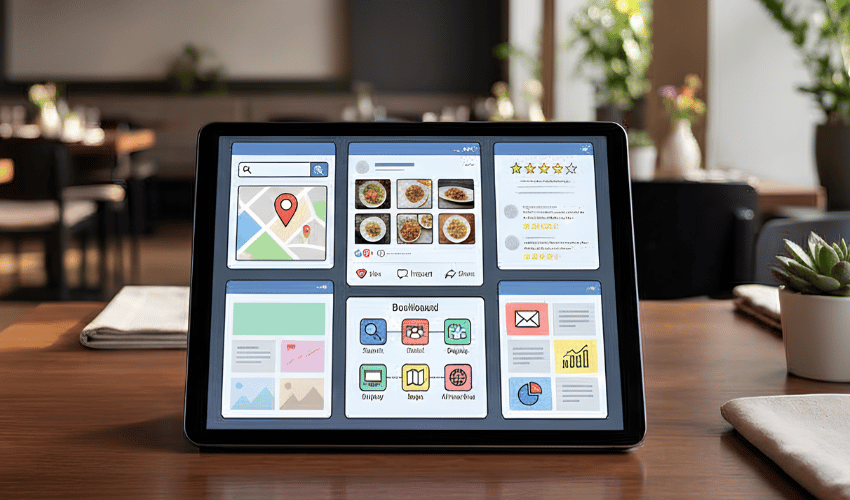
Google Ads
The king of "intent." Google Ads help you appear at the exact moment someone types "best sushi near me." For restaurants, Google offers specialized tools to bridge the gap between a phone screen and a seat at your table:
-
Location Extensions: Display your address and distance directly in the ad.
-
Click-to-Call: Allow hungry diners to call for a reservation with one tap.
-
Get Directions Ads: Drive users directly to your front door using Google Maps integration.
To maximize ‘near me’ results, align your ads with your site + listing. Start with website management & local SEO for your restaurant.
TikTok Ads
In 2026, TikTok is a major search engine for food discovery among Gen Z and Millennials.
-
Spark Ads: Use these to "boost" a video a customer already made about your food for maximum authenticity.
-
Search Ads: Target specific phrases like "aesthetic brunch spots" to show up in the TikTok search results.
Instagram & Facebook Ads (Meta)
Meta platforms are highly visual. Instagram is perfect for "drool-worthy" food photography and Reels, while Facebook remains excellent for promoting events and targeting family-oriented demographics.
Yelp Ads
Specifically built for restaurant discovery, Yelp Ads place your business at the top of local search results when diners are actively comparing reviews.
Types of Digital Advertising for Restaurants
Restaurants don’t need every ad format on every platform; they need the few ad types that move people from screen to seat. Search ads capture intent, social video ads tell your story, geo‑targeted and store‑visit ads focus on nearby guests, and retargeting brings back people who almost booked. Using each of these formats for a clear purpose makes your budget go much further.
Search Ads
Capture high-intent diners on Google. These ads appear at the very top of search results, making your restaurant the first option they see.
Social Media Video Ads
Tell your story through motion. Show the sizzle of the grill or the "vibe" of your dining room on TikTok and Instagram to create an emotional connection.
Geo-Targeted & Store Visit Ads
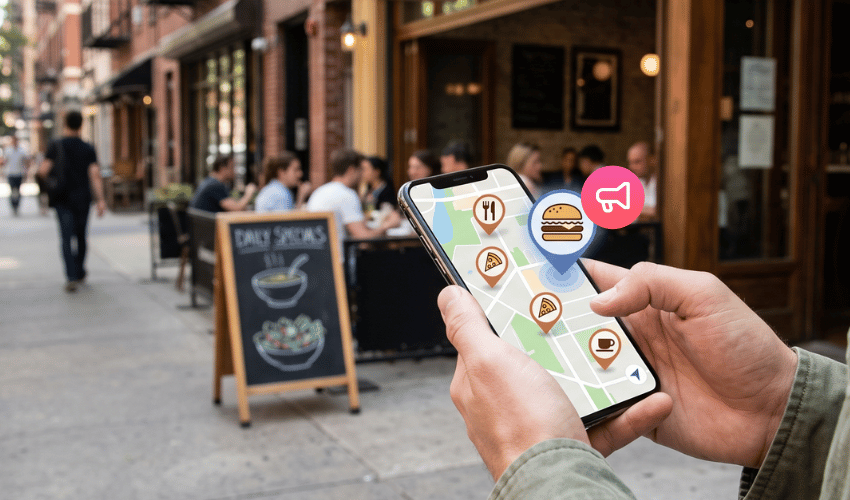
Stay hyper-local. Set your ads to only show to people within a 3–5 mile radius of your front door. Google’s Store Visit technology can even track how many people physically walked into your restaurant after seeing your ad.
Retargeting Ads
If a user visits your website but doesn't make a reservation, retargeting ads "follow" them to remind them of the meal they almost booked, enticing them to return.
A fast, mobile-first menu page matters. Explore the benefits of a well managed restaurant website.
What Pro Tips Help Restaurants Get Maximum ROI from Digital Ads?
Go beyond the basics with these advanced strategies:
-
Leverage User-Generated Content (UGC): Ads that feature a real customer’s video of their meal often perform better than professional commercials. People trust other diners more than the business owner.
-
Use "Flash Ads" for Slow Shifts: Is Tuesday lunch dead? Run a 24-hour localized ad: "Show this ad for a free dessert with any entrée today only!"
-
Competitor "Conquesting": In Google Ads, you can bid on your competitor's name. When someone searches for a nearby chain, your ad can appear with a message like: "Support Local: Try our authentic, handmade pasta instead!"
-
Implement "Review Retargeting": If someone visits your reservation page but doesn't book, show them a retargeting ad that features a 5-star testimonial from a recent guest to seal the deal.
-
Connect to Your POS: If possible, link your digital ads to your reservation system (like Resy or OpenTable) to track exactly how many "covers" your ads generated.
How Should Restaurants Time Digital Ads Around Seasons and Events?
Timing can matter as much as targeting: the same ad can perform very differently depending on when you run it. Restaurants that plan campaigns around holidays, big events, and menu changes usually see better results than those that advertise randomly.
-
Holiday Lead-In: Start advertising for major events like Valentine’s Day or Mother’s Day 2–3 weeks in advance.
-
Menu Launches: Use short-term, high-intensity ad bursts to create "FOMO" (fear of missing out) around seasonal or limited-edition dishes.
How Do You Create a Successful Digital Ad Campaign for a Restaurant?

Define Your Goals
Are you looking for reservations, phone calls, or physical walk-ins?

Identify Your Audience
Are you targeting families, "foodies," or local office workers?

Compelling Message
Highlight your "Why"—is it the authentic recipes, the rooftop view, or the 2-for-1 happy hour?

Monitor and Optimize
Check your analytics weekly to see which ads are bringing in the most customers and adjust.
Common Questions About Restaurant Digital Advertising
Q: How much should a restaurant spend on digital advertising?
A standard benchmark is to dedicate 5% to 10% of your monthly revenue to marketing, utilizing a portion of that for targeted digital ads. To maximize your return, start with a controlled pilot budget for the first 90 days. This allows you to test the waters, track your cost per acquisition, and see which platforms drive the most traffic. Once you identify your top-performing ads, you can efficiently scale your budget to accelerate your restaurant's growth.
Q: Which digital ad platforms work best for restaurants?
The top platforms focus on where local diners are actively looking:
- Google Ads: Captures high-intent searches like "best sushi near me" right when people are looking for a place to eat.
- Meta (Instagram & Facebook): Perfect for visual storytelling, retargeting website visitors, and putting enticing promotions directly in front of local foodies.
- TikTok: Highly effective for short-form video ads that showcase your restaurant’s aesthetic, food prep, and vibe to a younger demographic.
Q: What is the difference between paid ads and organic marketing for restaurants?
Paid ads deliver fast, measurable foot traffic for promotions or slow nights, while organic marketing—like your Google Business Profile and Instagram feed—builds long-term brand loyalty. Ads work best when they push traffic to a well-maintained organic presence that proves your restaurant is worth visiting.
Q: How do I measure ROI from restaurant digital advertising?
While platforms like Google and Meta can track online orders, reservations, and phone calls, they can only estimate physical store visits. To measure true ROI, combine your direct online data with offline tracking methods like exclusive ad-only promo codes or QR code menu redemptions. Ultimately, the best indicator of success is analyzing your "macro lift"—comparing your total monthly revenue during an active ad campaign against your historical baseline to see the real-world impact on your bottom line.
Q: How long should I run a digital ad campaign for my restaurant?
It completely depends on the goal of the campaign:
- Always-On Campaigns: Run branding or general awareness ads continuously (or for at least 4 to 8 weeks) to let the algorithm optimize and capture steady, ongoing reservations.
- Holiday & Event Promos: Run time-sensitive ads—like Mother's Day specials or wine-tasting events—for 2 to 3 weeks leading up to the date, turning them off immediately afterward.
- Limited-Time Offers (LTOs): Match the ad lifespan to the menu special, giving it just enough runway to build urgency before the offer expires.
Q: Do small independent restaurants really need digital ads?
Yes, independent restaurants often benefit the most because digital ads can target a tight radius and reach people who are actively deciding where to eat. Even a modest, well-targeted budget can outperform broad offline tactics like print flyers in terms of cost per new guest.
Q: Should I manage restaurant digital ads myself or hire an agency?
While handling basic promotions yourself is possible, digital ad platforms require continuous optimization to avoid wasting budget. If you are just boosting an occasional post, a DIY approach works. However, for multi-channel campaigns, location-based targeting, or scaling your revenue, partnering with a specialist ensures your budget is actively managed. Agencies bring the technical expertise needed to track precise ROI, A/B test creatives, and ensure your ads actually turn into physical foot traffic.
Why Work with a Digital Advertising Agency?
Managing ads across Google, TikTok, and Meta while running a kitchen is a full-time job. An agency can handle targeting, creative, tracking, and optimization so your budget goes toward campaigns that actually bring in guests rather than trial‑and‑error experiments. This is especially valuable when you’re spending more or advertising across Google, Meta, TikTok, and local platforms at once.
Take Your Restaurant to New Heights
Ready to fill your tables? With the right strategy, you can turn scrolls into strolls through your front door. Contact Best POS Restaurant Marketing Agency today for a free digital audit and let’s start growing your restaurant's presence!

Furqan is Marketing Manager at Best POS Restaurant Marketing Agency. He's dedicated to delivering results that not only meet but exceed the unique challenges that restaurant businesses face.