
Quick Answer
Restaurant micro influencer marketing means working with smaller food creators whose audiences are concentrated in the restaurant's local market.
For most restaurants, the goal should not be finding the creator with the highest following. It should be finding creators whose audience is nearby, engaged, relevant to the restaurant, and likely to become customers.
A practical campaign can start with a small group of local creators, clear collaboration terms, trackable offers or links, and a simple process for measuring results.
This guide focuses specifically on local micro influencer campaigns, including how to find creators, evaluate them, contact them, structure collaborations, and measure performance. For a broader look at restaurant influencer marketing, see our restaurant influencer marketing guide.
Start With a Clear Campaign Goal
Before contacting creators, decide what you want the collaboration to accomplish.
|
Goal |
What to Measure |
|
Local awareness |
Reach and local engagement |
|
Content creation |
Quality and amount of usable content |
|
Restaurant traffic |
Visits, reservations, or tracked actions |
|
Direct orders |
Promo codes, links, or orders |
|
Community building |
Engagement and ongoing relationships |
This prevents influencer marketing from becoming a simple exercise in inviting creators and hoping for results.
Why Local Micro Influencers Can Be Valuable
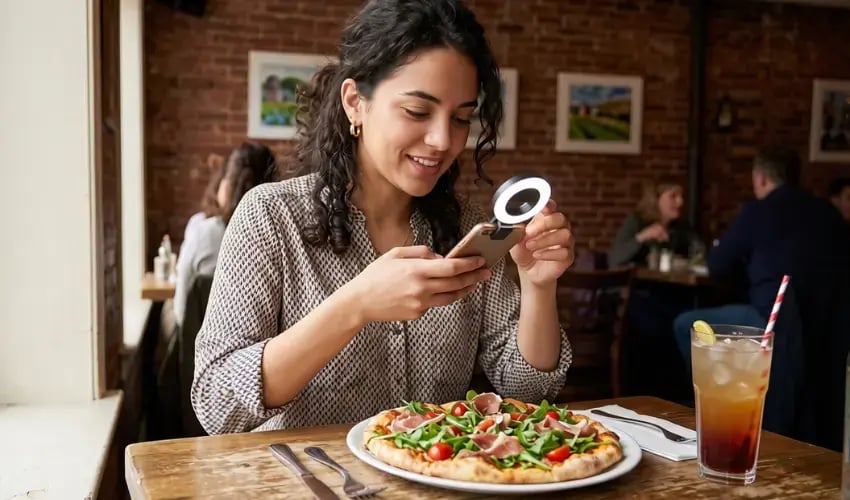
A large audience does not automatically mean a valuable audience for a restaurant.
A creator with 5,000 followers concentrated around your city may be more useful than a creator with 50,000 followers spread across several states.
Local micro influencers can offer:
- Stronger local relevance
- Familiarity with nearby restaurants and communities
- More manageable collaboration costs
- Useful food content
- Opportunities to test different local audiences
The important factor is audience fit, not follower count alone.
How to Find the Right Creators
Start with Instagram and TikTok searches using your:
- City
- Neighborhoods
- Local food terms
- Restaurant searches
- Location tags
- Creators already featuring nearby restaurants
Look at recent content rather than relying only on the creator's profile description.
You want evidence that the creator regularly talks about restaurants, food, businesses, or places in your market.
You can also look at creators working with other local restaurants, but do not assume that a creator who works well for one restaurant will automatically fit yours.
Use a Simple Creator Scorecard
Use this practical framework to compare potential creators. These percentages are a working framework, not an industry standard.
|
Factor |
Suggested Weight |
|
Local audience |
30% |
|
Engagement quality |
25% |
|
Content quality |
20% |
|
Food relevance |
15% |
|
Brand fit |
10% |
What to Check
Location: Does the creator regularly feature your city or nearby areas?
Audience quality: Do followers appear to live nearby? Do they ask where the restaurant is or tag local friends?
Engagement: Are people having real conversations rather than leaving generic comments?
A basic engagement rate can be calculated as:
(Average Likes + Average Comments) ÷ Followers × 100
Use this as a directional measure, not a strict pass or fail rule.
Content quality: Review recent videos for clear food footage, strong hooks, useful captions, and content that makes people want to visit.
Brand fit: Does your restaurant naturally fit the creator's usual content?
Also look for warning signs such as unexplained follower growth, very low engagement, repetitive promotions, generic comments, or an audience outside your market.
What We’ve Learned From Restaurant Influencer Campaigns
From working with restaurant brands on local influencer campaigns, one of the biggest lessons is that follower count alone is a poor way to choose creators.
A smaller creator with a strong local following can sometimes be more valuable than a much larger creator whose audience is spread across different cities or states.
A few practical lessons we’ve seen repeatedly:
- Local relevance matters more than reach. Look for creators whose followers actually live close enough to visit the restaurant.
- Content quality matters beyond campaign performance. A strong creator can also produce useful food content that may have value across the restaurant’s own marketing channels when usage rights are agreed upon.
- Not every creator needs to become a long-term partner. Test different creators, track the results, and build stronger relationships with the ones who consistently bring the right audience.
- The restaurant experience still matters. Influencer marketing can create attention, but poor service, long waits, or an inconsistent dining experience can quickly undermine that attention.
The most effective approach is usually to treat influencer marketing as an ongoing testing process rather than placing all of the campaign budget or expectations on one creator.
Reaching Out to Influencers: What Should You Say in the First Message
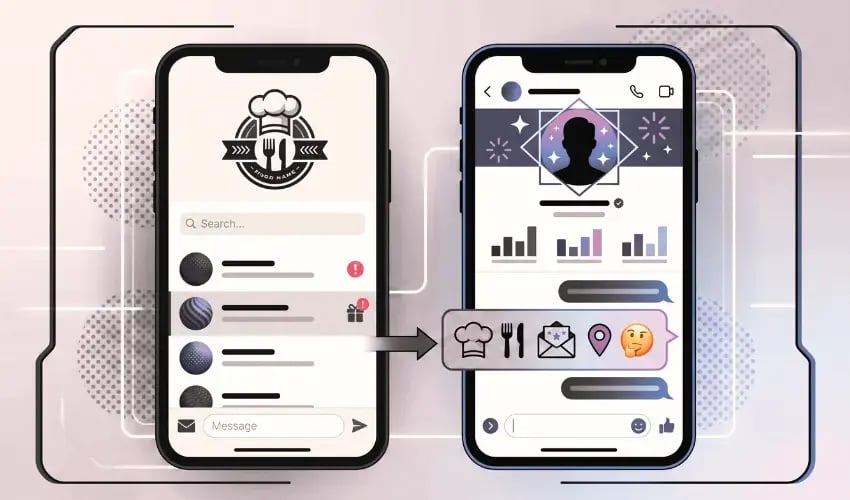
Your first outreach should be short and personalized.
Casual Collaboration
Hey [First Name]! Loved your recent video on [Local Restaurant]. We run [Restaurant Name] in [Neighborhood], and we'd love to host you and a guest for a complimentary meal. If you enjoy the experience, we'd love to collaborate on a Reel or TikTok. Let us know if you're interested!
New Menu Item
Hi [First Name]! We love your food recommendations around [City]. We recently launched [Menu Item] at [Restaurant Name], and we're inviting a few local food creators to try it. We'd love to host you and a guest. Let us know if you'd be interested!
Personalize the message by mentioning a recent video, dish, restaurant, or neighborhood.
Free Food or Paid Partnership?
Key Takeaways
A complimentary meal can work well for some smaller local collaborations, but it is not a universal replacement for creator compensation.
A hosted meal may make sense when you are inviting a smaller local creator to experience the restaurant without requiring extensive deliverables.
A paid partnership becomes more appropriate when you need guaranteed content, multiple posts or videos, specific deadlines, advertising usage rights, exclusivity, or a more involved production.
The more specific the requirements, the more appropriate a formal paid arrangement may become.
Confirm the Terms Before the Visit
Even a small collaboration should have clear expectations.
Confirm:
- What the restaurant is providing
- Number of posts or videos
- Stories, if applicable
- Posting timeframe
- Restaurant tags and location tags
- Any required campaign information
- Content usage rights
A creator agreeing to post about your restaurant does not automatically give the restaurant permission to use that content everywhere.
Clarify whether the content can be used on your organic social channels, website, email, or paid advertising.
Make the Visit Easy to Create From
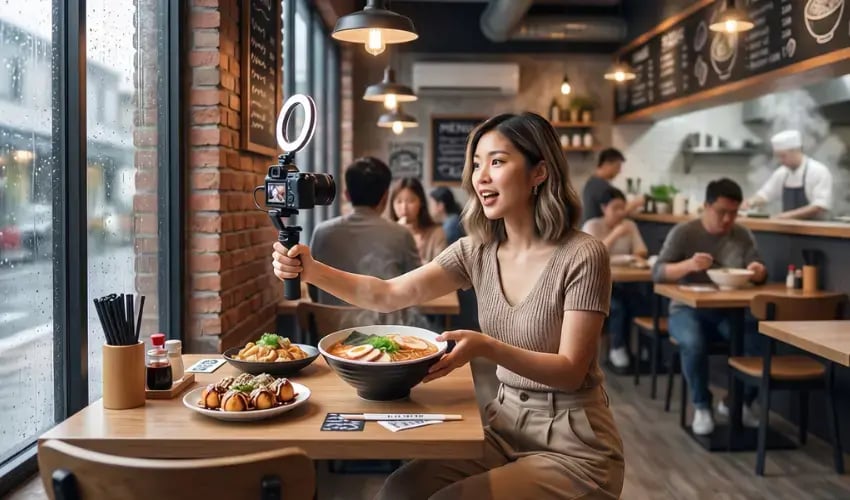
You do not need a staged production environment.
You do need an experience that is easy for the creator to understand and capture.
Schedule visits during practical times when possible, especially slower periods that give your team more time to provide good service.
Choose dishes that naturally present well on camera, such as sizzling dishes, table side preparations, sauce pours, shareable platters, visually interesting desserts, etc.
Give the creator useful information about signature dishes, best sellers, ingredients, spice levels, promotions, and ordering options.
The goal is to provide context without scripting what the creator should say.
Remember Influencer Disclosure
When a creator receives free food, payment, discounts, or another material benefit in connection with an endorsement, disclosure requirements may apply.
For U.S. campaigns, restaurants and creators should review the current FTC Endorsement Guides.
The practical takeaway is simple: a vague term such as “collab” is not necessarily enough. Make sure any required disclosure is clear and easy for viewers to notice.
What If the Creator Does Not Post?
Not every collaboration will result in published content.
Instead of pressuring the creator, ask whether they can share useful feedback.
Was the issue the food, service, wait time, presentation, or something else?
A creator's feedback may reveal customer experience issues that the restaurant has overlooked.
The goal is not to make every creator publish.
It is to build relationships with creators who genuinely like the restaurant and whose audiences are relevant.
How to Track Influencer Results

Do not treat influencer marketing as simply free exposure.
Track four things:
Reach: How many people saw the content?
Engagement: How many watched, commented, shared, or saved it?
Conversions: Did people take a measurable action?
Revenue: How much revenue can reasonably be attributed to the collaboration?
Useful tracking methods include:
- Creator specific promo codes
- QR codes
- Online ordering links
- Reservation links
- Landing pages
- Loyalty signup links
Give each creator a unique tracking method whenever possible.
For example:
SARAH10
MIKE10
JENNY10
This makes it easier to compare creators and identify which partnerships produce real customer activity.
A Simple Influencer ROI Formula
Use:
Influencer ROI = (Attributed Revenue − Campaign Cost) ÷ Campaign Cost × 100
For example, if a restaurant provides $50 in complimentary food and the campaign generates $600 in attributed revenue:
($600 − $50) ÷ $50 × 100 = 1,100%
This is only a basic calculation. It does not capture organic reach, content value, future visits, repeat customers, or people who saw the content without using the tracking method.
Still, it gives you a useful starting point for comparing campaigns.
How Many Creators Should You Test?
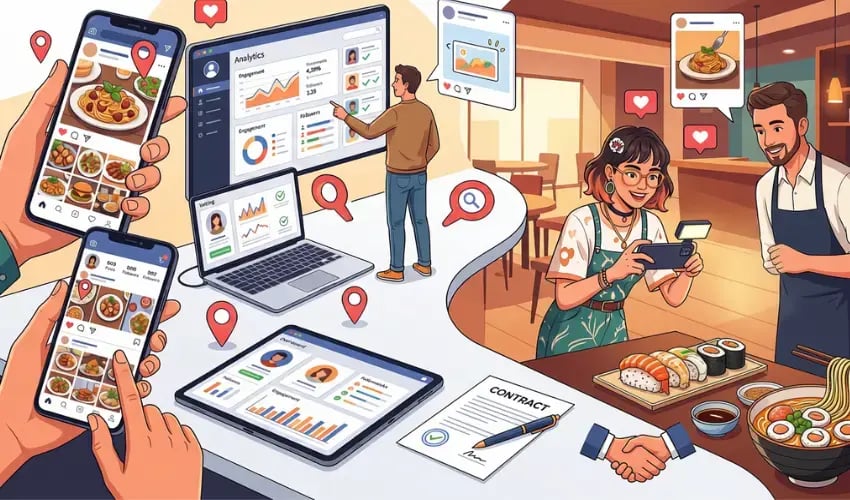
There is no universal number every restaurant should follow.
As a practical starting test, a restaurant could work with 2 to 4 creators per month if it has enough content opportunities, staff capacity, and budget to support the collaborations.
Then review which creators produced:
- Strong local engagement
- Useful content
- Promo code or link activity
- Orders or visits
- Repeat customer activity
Scale the relationships that consistently produce value rather than simply increasing the number of creators.
Turn Social Attention Into Customer Action
Influencer content creates awareness, but the restaurant needs to make the next step easy.
After seeing a creator's post, customers should be able to quickly:
-
Find the restaurant
-
View the menu
-
Make a reservation
-
Get directions
-
Join the restaurant's loyalty program
If your online ordering system supports campaign specific tracking, creator activity can be connected more directly to measurable customer actions.
Frequently Asked Questions
Should I pay micro influencers in addition to free food?
Not necessarily. Smaller local creators may accept a complimentary dining experience, but expectations vary by creator, audience, platform, content quality, and requested deliverables. Paid partnerships are more appropriate when you need guaranteed content, multiple deliverables, specific deadlines, or commercial usage rights.
What follower count should I look for?
Do not make follower count your primary selection criterion. Prioritize local audience relevance, engagement quality, content quality, food relevance, and brand fit.
What if a creator asks for payment?
Ask what the fee includes. Clarify the number of posts or videos, Stories, posting timeline, usage rights, advertising rights, revisions, and exclusivity before deciding whether the partnership is worthwhile.
How many creators should I work with each month?
Start with a manageable test rather than a fixed industry target. Testing 2 to 4 creators per month can be a practical starting point for restaurants with enough capacity to support the collaborations.
Can I reuse influencer content?
Not automatically. If you want to use creator content on your website, in ads, email marketing, or other commercial materials, confirm usage rights with the creator first.
For organic social media, restaurants often reshare creator content while clearly tagging and crediting the original creator. For content you plan to download, edit, republish, or use beyond a simple social reshare, it’s best to get the creator’s permission.
How do I measure micro influencer ROI?
Use creator specific promo codes, QR codes, links, landing pages, reservations, or online ordering tracking where possible. Compare customer actions and attributed revenue with the cost of the collaboration.
Final Takeaway
Restaurant micro influencer marketing works best when you treat creators as local marketing partners rather than simply people with large follower counts.
Find creators whose audiences overlap with your customer base. Set clear expectations. Give each collaboration a measurable goal. Track what happens after the content is published.
Then invest more time in the creators who consistently bring the right audience, useful content, and measurable customer activity.