
Quick Answer / TL;DR
A restaurant marketing agency specializes in the unique challenges of restaurant growth, including local search, Google Business Profile optimization, reputation management, restaurant focused social media, promotions, paid advertising, online ordering, and customer retention. A general marketing agency can offer broader marketing expertise across industries, but may not have the same depth of restaurant specific knowledge.
Choose a restaurant marketing agency if restaurant specific expertise, local visibility, guest acquisition, repeat visits, and multi location execution are priorities for your business.
Choose a general marketing agency if you need broad marketing services and your business has marketing requirements that extend beyond restaurant specific channels.
Restaurants Have Different Marketing Requirements
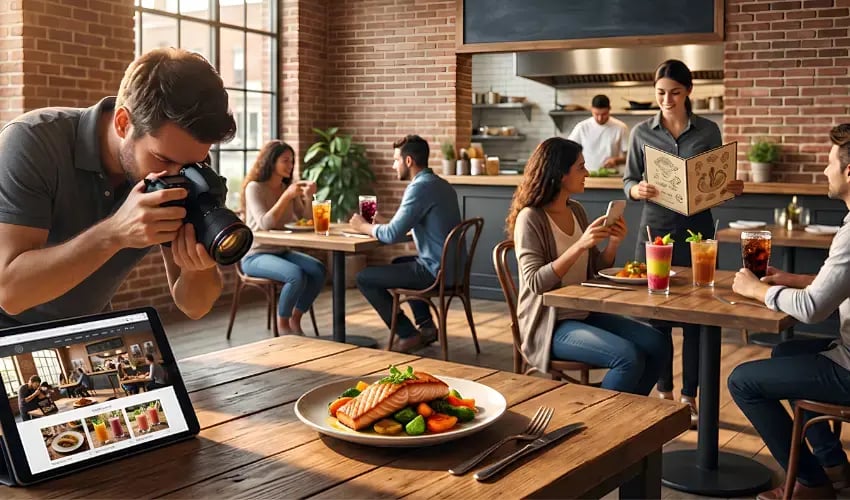
Restaurants do not compete for attention the way most other businesses do. A diner does not simply see an ad and click through to a shopping cart. They discover a restaurant through local search, evaluate it through photos, menus, and reviews, decide whether to visit or order, and then, ideally, come back again and again.
That means restaurant marketing involves a specific set of moving parts: local discovery, Google Maps visibility, reviews, menu searches, location specific promotions, food focused content, online ordering, repeat visits, delivery, loyalty, multi location consistency, and reputation management.
So when choosing an agency, the question is not simply "Can they do marketing?" It is whether they understand how restaurant customers discover, evaluate, visit, order from, and return to restaurants. That distinction shapes every comparison in this guide.
Restaurant Marketing Agency vs. General Marketing Agency: At a Glance
|
Restaurant Marketing Agency |
General Marketing Agency |
|
|
Industry focus |
Restaurants only, often multiple concepts and locations |
Multiple industries, restaurants may be one of several verticals |
|
Local SEO and Google Maps |
Deep, restaurant specific experience with menus, categories, and location pages |
Varies, may apply general local SEO practices |
|
Restaurant social media |
Built around food, menus, promotions, and dining occasions |
Varies, may treat it like any other industry's content |
|
Paid advertising |
Tuned to dayparts, delivery radius, and "near me" intent |
Varies, may run standard geo targeted campaigns |
|
Reputation management |
Restaurant review platforms and response strategy |
Varies, may offer general review management |
|
Promotions |
Understands which promotions protect margin versus erode it |
Varies, may not track restaurant specific promotion economics |
|
Retention and loyalty |
Built around visit frequency and guest data |
Varies, may treat retention as a secondary priority |
|
Multi location marketing |
Centralized brand strategy with local execution per location |
Varies, capability depends on the agency |
|
Best fit for |
Independent restaurants, restaurant groups, franchises |
Businesses across multiple industries or with broader marketing needs |
What Is a Restaurant Marketing Agency?
A restaurant marketing agency specializes in serving restaurants, restaurant groups, franchises, multi location operators, or specific restaurant concepts.
Specialization means the agency understands three things in depth.
How people find restaurants. Through Google Maps, Google Search, Yelp, social media, word of mouth, influencers, and delivery platforms.
How people choose restaurants. Based on reviews, photos, the menu, location, hours, promotions, and social proof.
How restaurants generate repeat business. Through loyalty programs, SMS, email, offers, guest data, and retargeting.
A restaurant marketing agency builds its entire service model around that customer journey rather than adapting a general marketing playbook to fit a restaurant.
What Is a General Marketing Agency?
A general marketing agency works across multiple industries. It may serve restaurants alongside healthcare providers, SaaS companies, law firms, real estate agents, ecommerce brands, professional services, and retail businesses.
That is not inherently a disadvantage. A general agency often brings broad marketing experience, access to diverse industry perspectives, a potentially wider service offering, and may be a good fit for companies with complex marketing needs that extend beyond the restaurant side of the business.
The potential limitation is that the agency may have less specialized knowledge of restaurant specific customer behavior and channels, since its attention is spread across different industries with different customer journeys.
The 10 Biggest Differences Between a Restaurant Marketing Agency and a General Marketing Agency
1. Industry Expertise
A general agency typically brings broad experience across industries. A restaurant marketing agency brings deep experience with the restaurant specific customer journey.
That difference matters because a restaurant's path to a sale is not simply traffic, lead, conversion. It looks more like: local search, then menu, reviews, and photos, then visit or order, then the dining experience itself, then a review, then a repeat visit, then loyalty. That is a fundamentally different customer lifecycle than most industries follow, and it requires a different marketing approach at every stage.
2. Local SEO and Google Maps
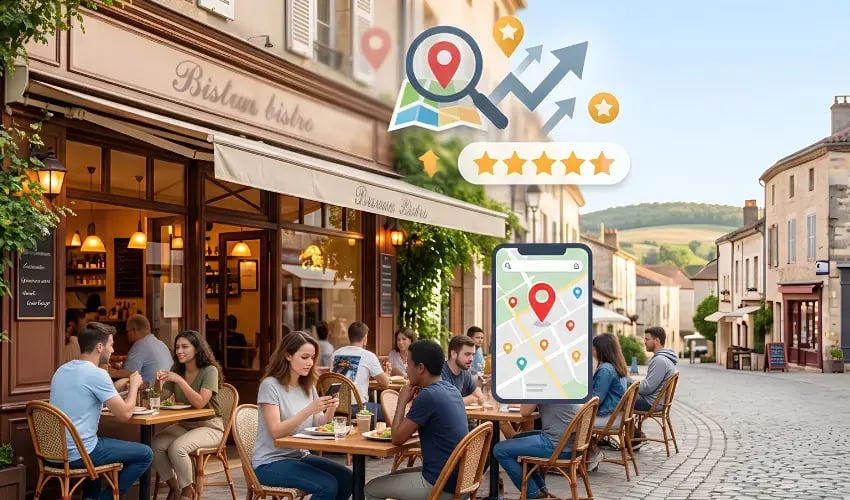
A general approach to local SEO usually means optimizing a website for local keywords. A restaurant specific approach goes considerably further, covering the Google Business Profile, restaurant categories, menu URLs, location pages, reviews, photos, hours, attributes, local citations, Map Pack visibility, neighborhood targeting, and location specific landing pages.
Restaurants are unusually dependent on local search because most diners are not searching for a restaurant brand by name. They are searching for "sushi near me" or "seafood restaurant open now," which means Map Pack visibility and an accurate, review rich Google Business Profile often matter more than the website itself.
3. Restaurant Social Media Marketing
It is not enough to say restaurants need social media. What makes restaurant social media different is what it needs to show: food, atmosphere, promotions, new menu items, events, user generated content, influencers, seasonal campaigns, and location specific content.
A general agency may know how to manage an Instagram account. A restaurant specialist should understand what makes someone hungry enough to visit, which is a different skill than managing engagement metrics in the abstract.
4. Google Ads and Paid Advertising
A generic paid search strategy rarely accounts for the variables that actually drive restaurant results: delivery and visit radius, lunch and dinner dayparting, location level budgets, branded searches, "near me" intent, promotions, online ordering, new location launches, catering, and seasonal demand.
For a real example of what this looks like in practice, Best POS rebuilt a Google Ads account for RDU Galleria, a dining destination near Raleigh Durham Airport. The original campaign was generating just 20 conversions at a cost of $101 per conversion. After a full restructure focused on keyword targeting, geographic precision, and updated bidding strategy, the campaign produced 5,150 conversions at $1.24 each, a 257 times increase in conversions for only 3 times the spend. That kind of result comes from understanding restaurant specific paid search levers, not from running a standard geo targeted campaign. You can read more about this approach on our Digital Advertising service page.
5. Reputation Management
Reputation management is one of the biggest restaurant specific differentiators. It covers Google reviews, Yelp, review response, review generation, rating monitoring, location level reputation, negative review escalation, and customer feedback.
A restaurant's star rating can strongly influence how customers evaluate it alongside nearby options. Best POS helped Sushi Kingdom Hiram go from limited visibility shortly after opening to a 5 star average Google rating across 297 reviews, and a top result for "sushi restaurants" in local search. Learn more on our Reviews Management service page.
6. Restaurant Promotions
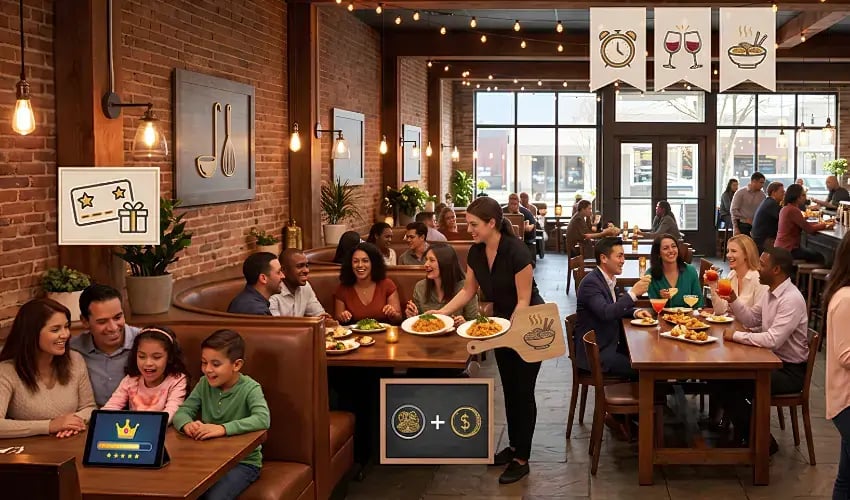
A restaurant marketing agency should understand limited time offers, happy hour, seasonal campaigns, buy one get one offers, loyalty rewards, first visit offers, daypart promotions, new menu launches, and influencer promotions.
But not every promotion is a good promotion. Some offers increase traffic while quietly reducing margin. Our Ultimate Guide to Unprofitable Restaurant Promotions and Smart Alternatives covers which common promotions tend to hurt profitability and what to run instead, which is exactly the kind of promotion economics knowledge that separates a restaurant specialist from a general agency running generic discount campaigns.
7. Online Ordering and First Party Customer Data
There is a meaningful difference between third party ordering, where a delivery marketplace owns the customer relationship, and first party ordering, where the restaurant owns its own guest data.
Marketing connects directly to this choice through online ordering, customer data, loyalty, SMS, email, retargeting, and repeat ordering. Restaurants using a platform like KloudEats for online ordering are able to capture guest information directly rather than routing every order through a third party marketplace, which then feeds every other retention channel covered below.
8. Customer Retention
General marketing agencies often focus heavily on acquisition. Restaurant marketing needs to answer a different question: how do we get that guest to come back?
That means building out loyalty programs, SMS marketing, email, guest segmentation, birthday campaigns, win back campaigns, visit frequency campaigns, rewards, and personalized offers. Retention is worth the focus. Research from Harvard Business Review and Bain and Company has found that acquiring a new customer typically costs 5 to 25 times more than retaining an existing one, which makes a restaurant's retention strategy one of the highest leverage parts of its marketing plan. For a deeper look at how to build that strategy, see our guide to restaurant loyalty programs.
9. Multi Location Marketing
Marketing across 5, 20, or 50 plus locations, or a franchise system, introduces a challenge most general agencies rarely face: balancing centralized strategy with local execution.
Corporate needs to control brand standards, campaigns, offers, and creative direction. Individual locations need local SEO, Google Business Profile updates, local reviews, location specific ads, local events, and local content. Getting that balance right is a core skill of a restaurant specific agency, and it ties directly into how location pages should be structured for both search visibility and brand consistency.
10. Restaurant Specific Reporting
Generic marketing reporting usually stops at impressions, clicks, and engagement. Restaurant operators care about a different set of numbers: calls, direction requests, website visits, online orders, reviews, search visibility, new customers, repeat customers, cost per acquisition, and revenue where it can be tracked.
Reporting tied to these outcomes keeps marketing accountable to what actually matters for a restaurant's bottom line, rather than to vanity metrics that do not translate into covers or orders.
Restaurant Marketing Agency vs. General Marketing Agency: Pros and Cons

Restaurant Marketing Agency
Pros: industry specialization, restaurant specific strategies, faster onboarding, relevant experience, specialized local SEO, restaurant specific promotional knowledge.
Cons: less suitable for businesses outside restaurants, may have a narrower industry focus.
General Marketing Agency
Pros: broad industry experience, wide range of capabilities, may be appropriate for diversified companies.
Cons: may require more restaurant specific education, restaurant strategies may need more customization, potentially less specialized experience.
Which One Should You Choose?
Choose a restaurant marketing agency if:
You are an independent restaurant. You operate multiple locations. Local search matters to your business. Google Maps is important to acquire. You need restaurant specific social media. You want better guest retention. You need restaurant promotions handled correctly. You want one team managing multiple restaurant marketing channels.
A general agency may make sense if:
Your business operates across multiple industries. You need marketing beyond the restaurant side of the business. Your marketing needs are primarily corporate or B2B. You already have strong restaurant specific expertise internally and only need execution support.
What Should You Ask Before Hiring a Restaurant Marketing Agency?
Before signing with any agency, restaurant or general, these questions help you evaluate fit:
How many restaurants do you currently work with? Do you have experience with multi location restaurants? How do you approach Google Business Profile optimization? How do you measure local SEO performance? How do you manage restaurant reviews? How do you approach restaurant social media? Can you manage Google Ads? How do you measure advertising performance? Do you support loyalty or retention marketing? Can you manage marketing across multiple locations? What does your monthly reporting include? Can you show restaurant specific case studies?
Why Best POS Takes a Restaurant Specific Approach
Best POS focuses specifically on restaurants, which shapes every service we offer.
Local SEO: Google Business Profile management, managing 40+ local listings, reviews, location pages, and Map Pack visibility.
Social media: Restaurant content, promotions, campaigns, user generated content, and location specific posting.
Paid advertising: Google Ads, Facebook and Instagram, and Yelp.
Guest retention: Loyalty, SMS, email, and CRM.
Restaurant technology: Online ordering through KloudEats and first party customer data.
Multi location marketing: Centralized strategy paired with location level execution and consistent reporting.
You can see the full range of what this looks like on our Services page.
Real World Results
Specialization is easier to claim than to prove, so here is what it has looked like in practice.
RDU Galleria, a dining and convenience destination near Raleigh Durham Airport, came to Best POS with a Google Ads account generating only 20 conversions at $101 each. After a full campaign rebuild focused on keyword targeting, geographic precision, and bidding strategy, the account produced 5,150 conversions at $1.24 each, a 257 times increase in conversions for only 3 times the ad spend.
Sushi Kingdom Hiram opened with limited digital visibility and few reviews. Best POS focused on accurate business listings, review generation, and community engagement. Within weeks, the restaurant reached a 4.9 star average Google rating across 297 reviews and became a top local search result for "sushi restaurants" in its area.
The Juicy Crab Carrollton launched three low budget social campaigns during its grand opening period. With a total ad spend of $550, the campaigns reached more than 50,000 local customers and generated over 900 comments, 800 likes, and 643 shares on Facebook, translating into a visible spike in lunchtime foot traffic during the restaurant's first weeks.
You can browse more examples like these on our Success Stories page.
Frequently Asked Questions
What's the difference between a restaurant marketing agency and a general marketing agency?
A restaurant marketing agency focuses exclusively on restaurants and builds its strategy around how diners discover, evaluate, visit, order from, and return to restaurants. A general marketing agency serves multiple industries and applies broader marketing principles that may need more customization to fit a restaurant's specific customer journey.
Is a restaurant marketing agency worth it?
For restaurants where local visibility, repeat visits, and restaurant specific promotions are priorities, a specialized agency can reach effective strategies faster since it already understands the customer journey and channels that matter most. Whether it is worth it for a specific restaurant depends on budget, current marketing performance, and whether the business already has strong restaurant marketing expertise in house.
How much does a restaurant marketing agency cost?
Cost depends on the scope of services, the number of locations, and whether the engagement covers a single channel like paid ads or a full package spanning social media, local SEO, reviews, and retention. Restaurants evaluating cost should compare scope of work side by side rather than comparing headline prices alone, since two agencies quoting similar rates can offer very different levels of service.
What services should a restaurant marketing agency provide?
At minimum, a restaurant marketing agency should offer local SEO and Google Business Profile management, restaurant focused social media, reputation and review management, paid advertising tuned to restaurant behavior, and support for retention and loyalty. Agencies serving multi location restaurants should also offer centralized brand strategy paired with local execution.
Do restaurants need a specialized marketing agency?
Not necessarily. A restaurant with strong internal marketing expertise, or one with broader marketing needs beyond the restaurant side of the business, may be well served by a general agency or an in-house team. Specialization becomes more valuable as local search, restaurant specific promotions, and multi location complexity increase.
Can a general marketing agency market a restaurant successfully?
Yes, particularly if the agency has prior restaurant experience or is willing to invest in understanding restaurant specific channels like Google Maps, review platforms, and dayparted advertising. Results vary by agency, since general marketing capability does not automatically translate into restaurant specific results.
What should I look for when hiring a restaurant marketing agency?
Look for restaurant specific case studies, experience with multi location brands if that applies to you, a clear approach to Google Business Profile and local SEO, a reputation management process, and reporting tied to outcomes like calls, direction requests, and online orders rather than only impressions and clicks.
What marketing channels are most important for restaurants?
Local SEO and Google Business Profile, restaurant focused social media, paid advertising tuned to dayparts and delivery radius, review and reputation management, and retention channels like loyalty, SMS, and email tend to matter most, though the right mix depends on the restaurant's concept and market.
Is restaurant SEO different from regular SEO?
Yes. Restaurant SEO leans heavily on local ranking factors such as the Google Business Profile, menu content, location pages, and review volume, because many restaurant searches have local intent, such as 'restaurant near me.' rather than broader informational searches.
How does restaurant marketing differ from other industries?
Restaurant marketing is built around a short, repeatable decision cycle: discover, evaluate, visit or order, experience, review, and return. Most other industries have longer consideration cycles or lower repeat purchase frequency, which means restaurant marketing places unusually heavy weight on local visibility, reviews, and retention compared to industries with longer sales cycles.
When a General Marketing Agency May Actually Be the Better Choice
A restaurant-specific marketing agency is not automatically the right choice for every business. In some situations, a general marketing agency may be a better fit depending on your company's structure, marketing goals, and existing resources.
Your Company Has Marketing Needs Beyond Restaurants
If your company operates restaurants alongside hotels, entertainment venues, retail businesses, or other types of businesses, a general agency may be able to manage the broader marketing strategy across the organization.
You Need B2B or Corporate Marketing
Restaurants primarily market to consumers, but some businesses also have significant B2B needs. If your marketing strategy depends heavily on corporate sales, enterprise partnerships, lead generation, or other B2B channels, a general agency with strong B2B expertise may be a better fit.
You Already Have Restaurant Marketing Expertise In-House
If you already have an experienced restaurant marketing team that understands local SEO, Google Business Profile management, restaurant advertising, social media, and guest retention, you may not need a specialized agency. A general agency can provide additional execution or specialized capabilities without taking over your restaurant marketing strategy.
The General Agency Has Proven Restaurant Experience
An agency does not have to exclusively serve restaurants to understand them. If a general marketing agency can demonstrate meaningful experience with restaurants, restaurant groups, or franchises, its broader industry expertise may actually be an advantage.
The key question is not simply whether an agency calls itself a "restaurant marketing agency." It is whether the agency can demonstrate a clear understanding of restaurant customer behavior, local search, reputation management, paid advertising, retention, and the operational realities of the industry.
Your Primary Need Is a Specialized Marketing Service
You may also be better served by a general or specialized agency if your primary need is something outside the core restaurant marketing ecosystem, such as enterprise branding, complex web development, corporate communications, or a broader company-wide marketing initiative.
Ultimately, the right agency depends on what your restaurant or company actually needs. Industry specialization can provide meaningful advantages, but the best agency is the one with the experience, capabilities, and strategy that align with your specific goals.
Final Verdict

For most restaurants, specialization matters. A general marketing agency can provide strong marketing expertise, but a restaurant marketing agency brings that expertise together with knowledge of local search, restaurant customer behavior, reviews, promotions, online ordering, retention, and multi location operations.
If your primary goal is growing a restaurant or restaurant group, a specialist agency is worth considering because the strategy is built around the way restaurant customers actually discover, choose, visit, order from, and return to restaurants.
Ready to see what your restaurant marketing could improve?